
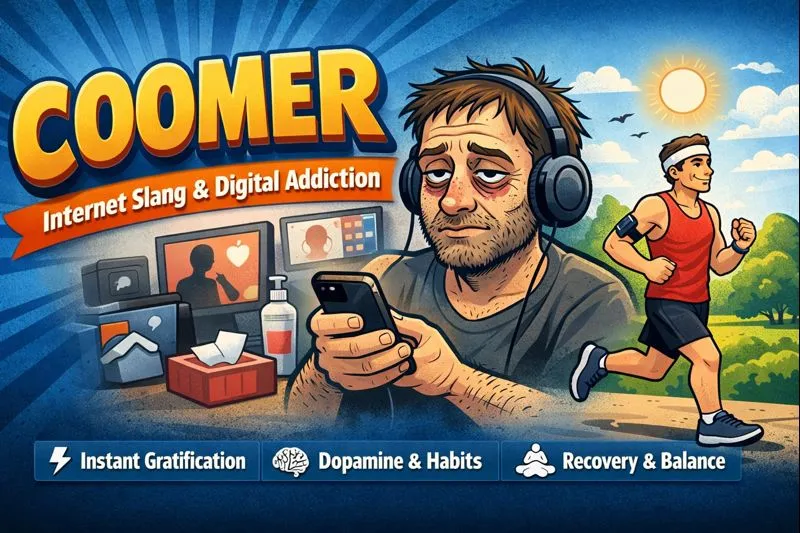
Coomer: Cultural Impact and Recovery Guide
Coomer is a portmanteau of computer and boomer, which is an internet slang word meaning someone who is excessively concerned with adult material and immediate gratification to the extent that it influences real life, attention, and inspiration. It was initially a meme but then expanded to include more people talking about habits, dopamine, self control, and internet habits. The term is currently commonly discussed in reference to the digital wellness and digital addiction awareness and contemporary internet culture.
Explanation of Comer Meaning in Simple Words
The term coomer may have been used online as a part of memes, in forums, or comment boxes. It is easy to think that it is just another bizarre internet joke. However, it has more meaning than many are willing to assume.
The word gained prominence as a means to describe a life that is being lived around an endless digital stimulation primarily of adult content and immediate gratification. Gradually, it became a representation of more serious problems such as the deficiency of discipline, excessive use of the internet, and the problem many individuals encounter in the areas of concentration and motivation.
This paper expounds on the true meaning of coomer, its origin, how it got popular and the general meaning when people use it in the modern era. You will also hear how it is related to mental health, online habits, and self improvement culture. All this is described without being hyped or judged in a very simple language.
What Does Coomer Mean
Coomer is a slang term, which is used to describe a person who is fixated on immediate satisfaction, particularly adult material. It is used mockingly or even in a criticizing manner but not so unkindly all the time.
In the majority of the instances, it characterizes a person who
- Wastes a lot of time using adult content.
- Struggles with self control
- Experiences poor motivation or vigor.
- Lifestyles in short term pleasure.
The phrase gained popularity in that it summarized such a trend that many of us were able to see in our lives or those of others. It is neither a medical term, nor a diagnosis. It is a label on the internet that is the marker of behavior and mentality.
Where the Term Came From?
The term coomer was created as a result of meme culture on image boards and forums. It was a development of the older slang expressions and was accompanied by a basic cartoon character that depicted exaggerated features such as eyelids that were tired or bad habits.
Initially, it was intended to be a dark humor. Gradually, its usage started to be more serious to discuss the impact that constant access to adult content has on the brain and behavior.
The condition became famous on social media platforms such as Reddit, Twitter, and meme pages as social media gained popularity. It was included in a broader discourse of dopamine, addiction, and digital overconsumption.
The Coomer Meme on its Popularity
There were several major reasons why the coomer meme became popular.
- First, it was relatable. A lot of individuals identified the trend of going to bed late scrolling or viewing videos that they were not proud of afterward.
- Second, it was a struggle of the times. The convenience of entertainment, adult materials and social media has transformed the way individuals deal with urges and attention.
- Third, it made funny remarks to highlight embarrassing facts. Serious subjects can be discussed easily with humor.
Finally, it developed into an antithesis of self improvement culture. The coomer mindset started to be compared in online circles to more disciplined lifestyles of fitness, being focused, and having purpose.
Coomer vs Healthy Habits
One of the main reasons why the word has not been forgotten is the fact that it points out the disconnect between short term enjoyment and long term longivity.
Here is a simple comparison.
Coomer mindset
- Chases instant pleasure
- Feels tired or unmotivated
- Avoids discomfort
- Spends hours online
- Feels stuck
Healthy mindset
- Builds long term habits
- Manages impulses
- Values focus and energy
- Uses time intentionally
- Feels progress over time
This was a contrast which made the meme more the symbol of self reflection than mere mockery.
Psychological Side of the Coomer Concept
The coomer concept has a close relation to dopamine behavior as a psychological perspective.
Dopamine is a brain chemical which is associated with motivation and reward. When a person always wants to get high stimulation activities then the brain may become less sensitive to normal rewards.
This can lead to
- Reduced motivation
- Difficulty concentrating
- Lower mood
- Hard to break habit loops.
This does not imply that a person is fractured. It simply implies that the brain has gotten used to patterns that are subject to change over time and hard work.
Is Coomer a Real Addiction?
The term itself is not a clinical word. Its behaviors are however overlapping with the actual problems of compulsive behavior or problematic content use.
Health workers tend not to use terms such as boomer but tend to concentrate on the symptoms such as
- Loss of control
- Adverse work or relationship effects.
- Failed attempts to stop
- Emotional distress
Support as well as behavior change strategies are possible in case one is stuck in these patterns.
The Coomer Meme has an influence on culture
Online culture has been affected by the coomer meme in several apparent ways.
- It contributed to the normalization of the conversation on self control and online practices.
- It drove certain individuals to self improvement communities.
- It raised arguments concerning shame and accountability.
- It identified the impact of online content on mental health.
Although the meme may be viewed as extreme or even judgmental by some people, other people view it as a wake up call in a funny way.
Stereotypes about Coomer
It only applies to men
Not true. Although the meme usually depicts an image of a male, the harmful effects of digital habits are shared across the genders.
It refers to being wicked or spoiled
False. It refers to conduct rather than character. Behavior can change.
It is just a joke
Partly true. It began as a joke but now is a sign of actual issues with contemporary life.
It promotes shame
There are those who abuse it in that manner, but the more healthy perspective is on awareness and development.
How People Use the Term Today
The term coomer is currently utilized in a number of ways.
- As a meme joke
- As self criticism
- As a warning about habits
- As an icon of the digital excess.
- As self improvement discourse.
Context matters. In some spaces it is playful. In others it is more serious.
Is it possible to make one cease being a Coomer?
Yes, since it does not represent an identity. It is a pattern.
Those who have later come to identify with the term note that positive changes include;
- Better focus
- Improved sleep
- More motivation
- Stronger relationships
- Higher self respect
The key is not guilt. It is knowledge and minute modifications with time.
Easy Things that People do to be better
These are some of the typical actions that individuals refer to as they leave unhealthy behaviors.
- Limiting screen time
- Avoiding triggers
- Building routines
- Exercising regularly
- Focusing on real world goals
- Getting enough sleep
- Minimizing aimless scrolling.
None of these are extreme. They are realistic and down to earth.
Coomer and contemporary Internet Culture
Attention is paid on the internet. Algorithms drive advertisements that create emotion and desire. This complicates self control to a level never seen before.
It is this reality that made the coomer idea famous as it was expressed in a simple image. It demonstrated how a person can become completely controlled by algorithms and habits.
To that extent it is not concerned with shame but is rather a matter of awareness.
Why the Term Still Matters in 2026
Although the trends might shift, the basic problem will always be there.
People still struggle with
- Overstimulation
- Digital fatigue
- Lack of focus
- Dopamine overload
The concept of coomer still persists since it is a problem that most inhabitants of the screen heavy world struggle with.
Frequently Asked Questions
The simple definition of coomer is what?
It refers to an individual who is excessively obsessed with immediate gratification particularly online material usually at the expense of pursuit and life ambitions.
Is coomer a real medical term?
No. It is internet slang, not a diagnosis.
Is the term offensive?
It may be applied in an offensive manner. It is used by some people in humorous way or self reflection.
Am I a coomer because I am addicted?
Not always. It is capable of advising bad habits, but only the professionals can diagnose addiction.
What caused the meme to go viral?
The reason is that a large number of individuals were associated with it and were aware of the behavior it detailed.
Is it possible to change these habits?
Yes. Through understanding, training, and encouragement, a good number of citizens change their practices and attitudes.
Is the term still used today?
Yes. Even now, it is found on memes, forums, and self improvement and digital health discussions.
Final Thoughts
The name coomer was a joke but turned out to be more serious. It represents contemporary life struggles with concentration, habits and self control in a digitized space of distractions.
It is not about judging people when it comes to understanding the term. It is all about being more aware of trends and healthy lifestyles. As a slogan, used intelligently can create reflection, amusement, and even transformation.
Finally, it is the awareness that counts. And awareness is the ever-first step to improvement.
Read Another Topic: Nova Scola