
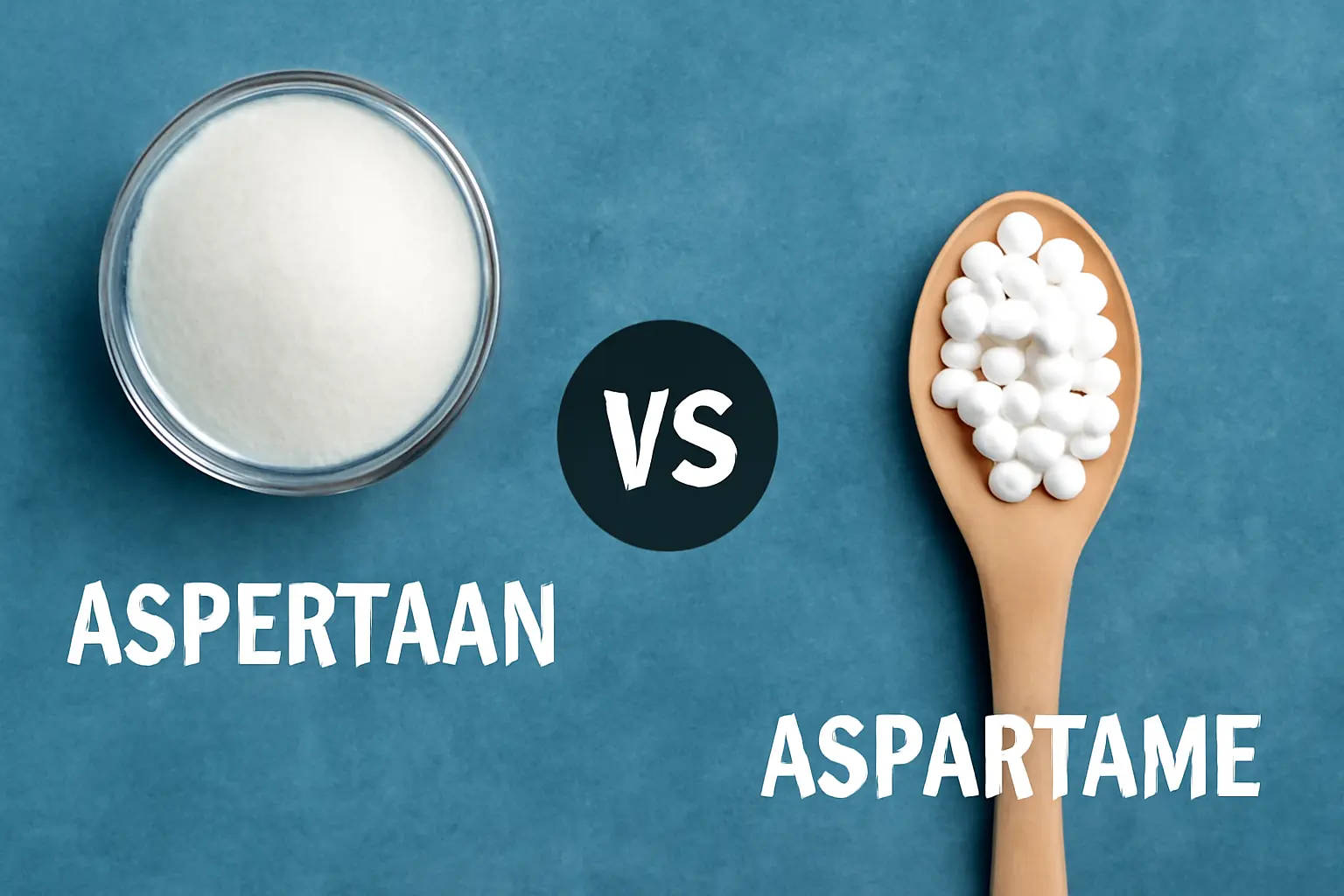
Aspertaan vs Aspartame: What You are really searching for
Most people will know about aspartame, a common substitute of sugar found in most low-calorie food and beverages. But what about Aspertaan? You may have heard the term being used around, and you may be wondering whether the term is associated with aspartame, you are not the only one. This paper will explore the distinction between Aspertaan and aspartame in some depth, including the definition of each, their applications and their potential consequences to your health.
What Is Aspertaan?
Aspertaan may be confused with aspartame at times, although this has one important distinction. Aspertaan can also be branded to a particular type of artificial sweetener that has similar taste and functionality as aspartame. Aspertaan, however, is a comparatively new product and is not as popular and commonly used as aspartame that has been a favorite sweetener over the decades.
In other instances, Aspertaan can also be used to refer to a certain mixture of sweeteners that aims at giving its customers an alternative to sugar that is free of calories (such as the diabetic or for individuals on a weight loss program).
What Is Aspartame?
Aspartame, however, is one of the most popular artificial sweeteners in the world. It is present in thousands of products such as soft drinks, gum and even in sugar free desserts. Aspartame is a product of two amino acids, namely, phenylalanine and aspartic acid, and methanol. It has up to 200 times more sweetness than sugar and thus is a good substitute of sugar to people wishing to reduce their caloric intake.
Aspartame was approved by the FDA many decades ago and its safety to human consumption is well-researched. Nonetheless, it has not gone without controversy over the years, primarily on its possible connection to health problems as we shall do the same.
Comparison of Aspertaan and Aspartame.
1. Composition and Production
Aspertaan: Aspertaan is normally a combination of artificial sweeteners that are meant to replicate the flavor of sugar, but are low in calories. Its special composition can be changed according to the producer and the required use. Although it might have the same ingredients as aspartame, it usually has other sweeteners to make it flavorful and healthier.
Aspartame: Aspartame This is a man-made molecule produced using two amino acids; methanol and phenylalanine with aspartic acid. This mixture gives rise to an excellent sweetener that has a taste of sugar, but without the calories.
2. Taste and Sweetness
Asperpaan: Asperpaan has a taste that can be said to be comparable to sugar; however, depending on the formulation it may deviate. Others believe that it has a bitter aftertaste particularly when consumed in large volumes.
Aspartame: Aspartame has a clean and sugar-like taste, but some consumers also exhibit a faint aftertaste. It does not possess such a good aftertaste as other sweeteners such as saccharin or sucralose.
3. Health Considerations
Aspertaan: Since Aspertaan is a new product there is less information on long term effects of Aspertaan than with aspartame. Nonetheless, it is deemed to be safe by the majority of people. As with any other artificial sweetener, it might be a great choice when one wants to cut the number of calories down or regulate the level of blood sugar. It should not be used by people with phenylketonuria (PKU) because it contains phenylalanine, a rare genetic disorder.
Aspartame: studies on aspartame have been ongoing over the years with most studies showing that aspartame is safe to most people. Nevertheless, it has been argued that aspartame can cause headaches, migraine, and even long term health problems, including cancer. So far research has not found aspartame to be strongly related to any severe health issues. But aspartame should be avoided by people with PKU, as their bodies cannot digest phenylalanine that may build up and damage the brain.
4. Use in Foods and Drinks
Aspertaan: Aspertaan can be found in specialty diet foods and beverages, which usually state either that they are sugar-free or low-calorie. It can be utilized in drinks, desserts and even some baked goods depending on the formulation.
Aspartame: Aspartame is also common in many food products and beverages. It is usually available in sugar free sodas, chewing gum and even table sweetener. Aspartame also does not decompose at room temperature, however, it may decompose at high temperatures, hence less effective in cooking and baking at high temperatures.
5. Regulatory Approval
Aspertaan: Aspertaan is a fairly new product and its status on approval might differ depending on the country. Regulations in the area must be verified to guarantee its safety and legality.
Aspartame: Aspartame has undergone extensive testing and has been accepted by the FDA, WHO, and other government agencies in the world. It is deemed to be safe in the vast majority of individuals, and its acceptable daily intake (ADI) is 50 milligrams per kilogram of the body mass.
Do Aspertaan or Aspartame have any health risks?
Aspartame and Aspertaan are normally considered to be safe when used in safe amounts. Nevertheless, like all food additives, there are also some who can respond negatively to it, particularly when they are sensitive to artificial sweeteners. Aspartame especially has been associated with headaches and gastrointestinal problems in certain individuals who use it. It is always a good idea to keep an eye on the reaction of your body in case you are taking huge amounts either.
Aspirin is not as popular, therefore there are less studies on Aspertaan, albeit it is presumed to be safe. In case you are worried about any artificial sweeteners, you should seek the advice of your care provider.
What is the best Sweetener?
It is a matter of personal taste and health objectives and the particular food or beverage you are taking that decides between Aspertaan or aspartame. Aspartame can be the best alternative in case you are seeking a proven and tested substitute with a history of safety. Aspertaan would be worth considering, however, in case you want a newer, presumably more customized sweetener mix.
FAQs:
Q1: Is Aspertaan safe to use?
Aspertaan is usually considered safe to most individuals but there is not a wide research like that of aspartame. The ingredient list should be always examined to make sure that there are no substances that the person is allergic to.
Q2: What is the difference between Aspertaan and aspartame?
Aspertaan is a newer sweetener which might include combination of sweeteners, and aspartame is a particular compound produced of phenylalanine and aspartic acid. They both are substitutes of sugar but can have different taste profiles.
Q3: Is it possible to use Aspertaan or aspartame in case of diabetes?
And, both sweeteners are healthy among diabetics as they do not increase blood sugar levels. Nevertheless, it is always necessary to consult your physician regarding the particular sweetener that can best suit you.
Q4: Does aspartame lead to cancer?
There have been wide researches that demonstrate that aspartame has no definitive linkage to cancer. The regulations such as the FDA and WHO regard aspartame as safe in the consumption of human beings when it is taken within the level of acceptable daily intake.
Q5: Does Aspertaan tend to have the same taste as aspartame?
No, Aspertaan and aspartame can even have varying tastes based on how they are formulated. Aspartame has a sweeter sugar-like flavor and Aspertaan has a slight aftertaste.
Q6: Can I bake with aspartame?
Aspartame is not a good baking powder as it decomposes at high temperature. Substitute with other heat resistant sweeteners to use in baking.
Check our Other latest Posts or Updates: https://ventscripe.co.uk/